


"I know I'll figure it out, even if I don't know how yet. That's the difference: the confidence to be handed a tough challenge and know that you'll make it through."
Who is Michael Ortega?
Michael Ortega is an incredible UI engineer here at UX is Fine. His path into games ran through Source Engine mods, Oracle databases, and a fan-run Star Wars Galaxies server, before landing him on AAA projects in Unreal Engine.
I sat down with Michael to talk about trial by fire, why he calls himself a "UI person," and what it takes to stop feeling like an impostor.
How did you first get into games?
Modding, back in high school. I figured out how to get co-op working for a Source Engine game called E.Y.E: Divine Cybermancy and maintained the Steam guide for it. Later I got my life together and landed a database engineering job at PayPal, working almost entirely in Oracle.
Meanwhile, I grew up on MMOs, and my main game was Star Wars Galaxies. It shut down in 2011. In 2015, the game's code leaked, and everyone who missed it came flooding back. It was like a high school reunion, with jokes from 2008.
The fan server had a tiny team, and nobody had a job in tech. As it turns out, the original studio was an Oracle shop, and nobody understands Oracle unless they work in it. So they asked, "What do you know about Oracle databases?" And I said, "I can turn it off and I can turn it on again." They said, "Great, you are so hired."
What was it like running an MMO as a fan?
We had about 10,000 users and 1,000 to 2,000 concurrent players, with a team of four. We ran the forums, the website, the servers, everything, and we had no idea what we were doing. Then the cyberattacks started, or some random error would break the server, and suddenly I went from someone who couldn't really program in Java to someone who had to figure it out ASAP.
That trial by fire lasted six to eight months straight. I came out knowing Java and how to debug C++.
How did you make the jump to Unreal?
Eventually I wanted to move beyond code written in 1999. I compared Unity and Unreal, and bet on Unreal because it had more serious projects and forward-looking tech. I taught myself through YouTube and made some bad projects.
Then a friend's studio offered me a spot on revshare. Don't do that, kids. It's negative money. But it was an excellent learning opportunity.
Our first game, a multiplayer arena battler called Enter The Arena, died because dedicated servers made no financial sense for an indie. The second, Blinding Blade, made it to Steam Early Access. It was a physics-based lightsaber combat game, kind of like Jedi Academy meets For Honor. I did most of the design, almost all of the engineering, and all the UI, in the bad old days before CommonUI. It got pulled back eventually, but I got most of my technical chops from that project.
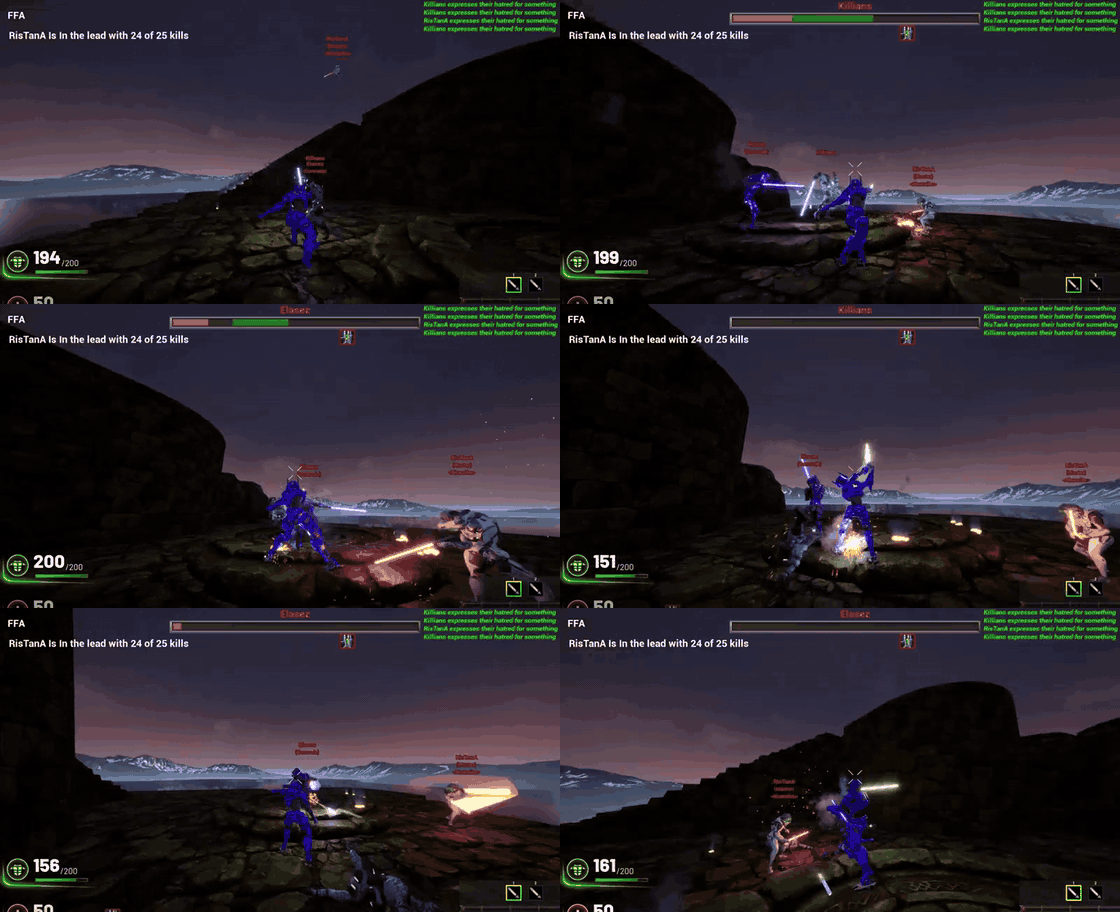
Blinding Blade, a physics-based lightsaber combat game.
How did you end up at Amazon?
I got a cold call. "We have this role, you look perfect for it. Do you have any UMG experience?" And randomly, I'd built an entire game in UMG. It's a meme RPG called DSJ Simulator, with maybe ten hours of content. You play as a Star Wars Galaxies player in Pokémon-style battles against other players' characters. Beat enough people, become the rank-one duelist, transfer servers, do it again. Spoiler: eventually the game shuts down and you lose it all.
This was the COVID era, my first introduction to employment scams, so I didn't believe the offer was real. The recruiter even interview-coached me, which felt weird. Then I met the two most serious engineers I've ever seen, both of which are still my friends today. Amazon interviewers are trained not to react, so I had no idea how I did. Thirty minutes later the recruiter called with an offer. I said, "There's no way, man."
What stuck with you from your time there?
On Storm Runners, I worked under an engineering director who taught me what excellent leadership looks like: people are trusted, treated like adults, and everyone is an important stakeholder. That can be a rare thing.
Then, ironically, our team got folded into a project run by the former president of Sony Online Entertainment, who owned Star Wars Galaxies. I got into games more or less because of his company's leaked code, and now I was working for him. What are the odds?
Later on New World, I worked on a bunch of screens, including the first battle pass, which completely revitalized the game. People say they hate battle passes, which is totally fair, but the numbers don't lie.
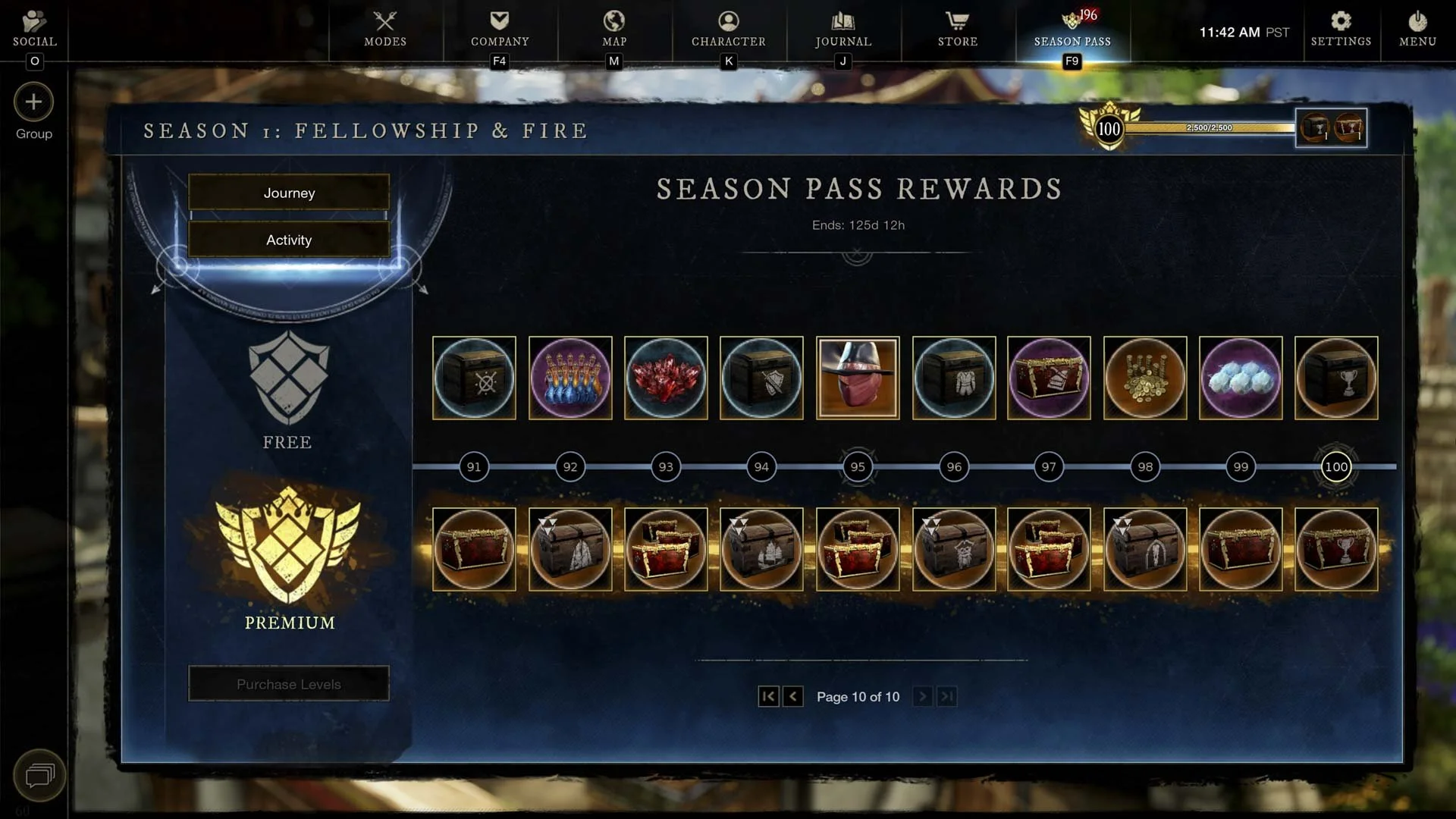
New World's first season reward track. Image: Amazon Games.
How would you describe what you do?
I've used the term "UI person" for a while, because I kind of do everything. On a recent engagement a screen needed designing, so I did the Figma for it. Right now I'm doing straight engineering, almost exclusively in C++. So what do I call myself? UI person. Generalist, I guess.
Was there a moment you realized, "I'm an expert now"?
Like many people, I've had impostor syndrome. I don't know exactly when the cure came. Definitely by the end of my time at Amazon.
When I was junior, getting handed something vague, where you don't even know what's being asked, caused a lot of panic. But once you've had enough problems that feel impossible, and then you sit down, whiteboard it, and it works, the feeling goes away. On New World I'd get asks like "build this UI system with no data." What do you mean?
Now when I get hit with a hard problem, I know I'll figure it out, even if I don't know how yet. That's the difference: the confidence to be handed a tough challenge and know that you'll make it through.
What do you enjoy most about UI work?
It's simple: I get to make the game. That's something you feel a lot in UI that you don't really get in backend engineering. In UI, you're as close to the end product as it gets.
Often the backend system is already done by the time you build the UI. But from the player's point of view, that system didn't exist until you hooked up the last thing. All that work underneath is invisible until the UI makes it real. Sitting there building it, and then having the thing actually working right in front of you, is incredibly satisfying.
Any advice for someone who wants to get into game development, or UI in particular?
Just do it. Don't even think about it. Everybody hates AI, but you can use it in ways Google never could have helped you, and you can start as fast as your internet can download an engine.
If you're a UI person, build a game only in UI. I learned a lot doing exactly that. You'll have to build the systems behind it, but at some point in a UI career people will ask you to do that anyway.
Of everything you've worked on, what are you proudest of?
On the Star Wars Galaxies project, I designed and implemented around 40 classes, each with the depth of a primary class on live, and all multi-classable. I was unemployed and job hunting at the time, so my GitHub is just months of green squares. Hundreds of unique abilities.
The idea was to capture the fantasy of the original vanilla game while keeping the years of content added along the way. It never really saw the light of day, but it's the work I'm most proud of.
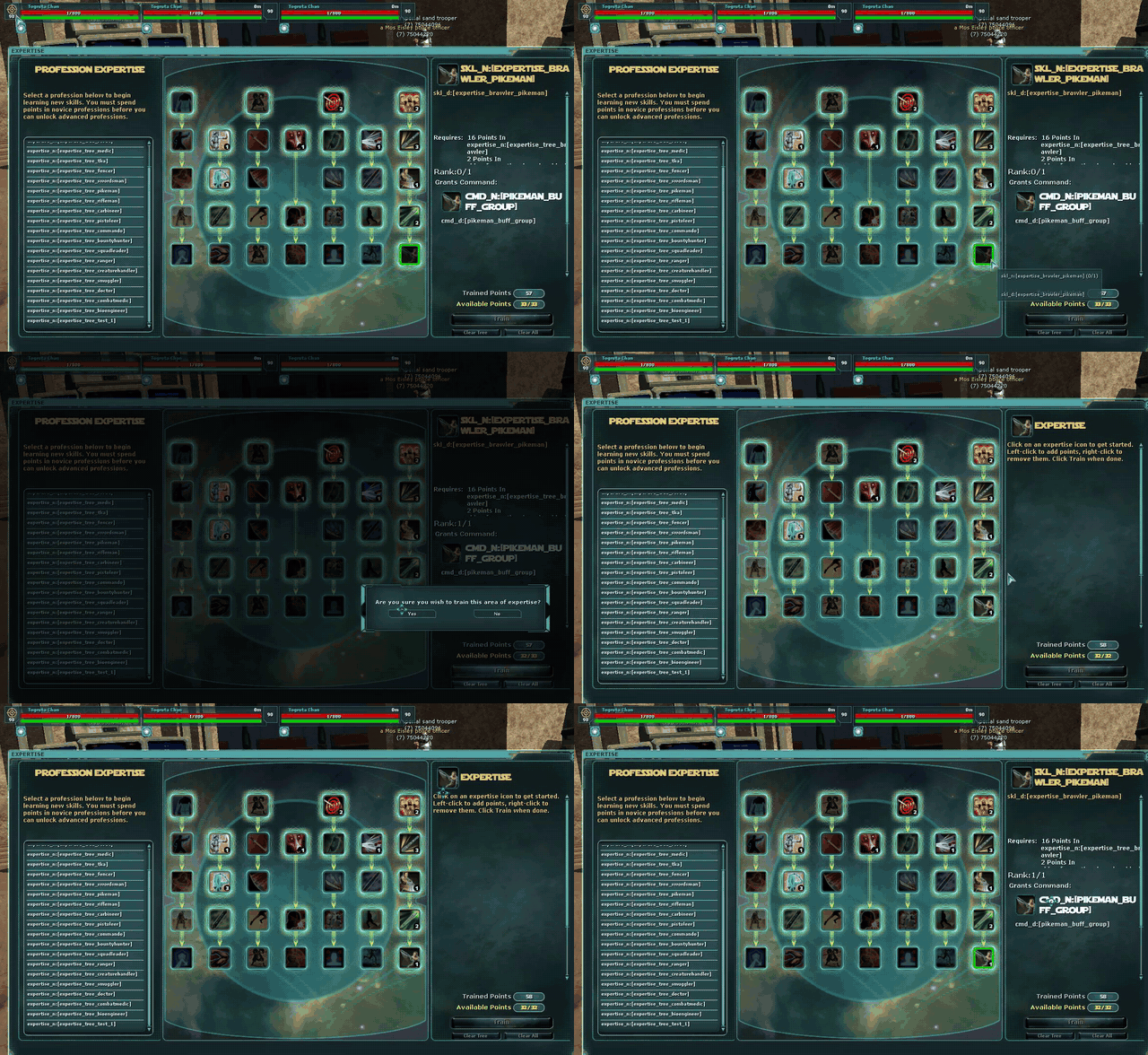
A profession expertise screen from the Star Wars Galaxies fan project.

