

How Our Streaming Channel Became UX is Fine’s Secret Weapon
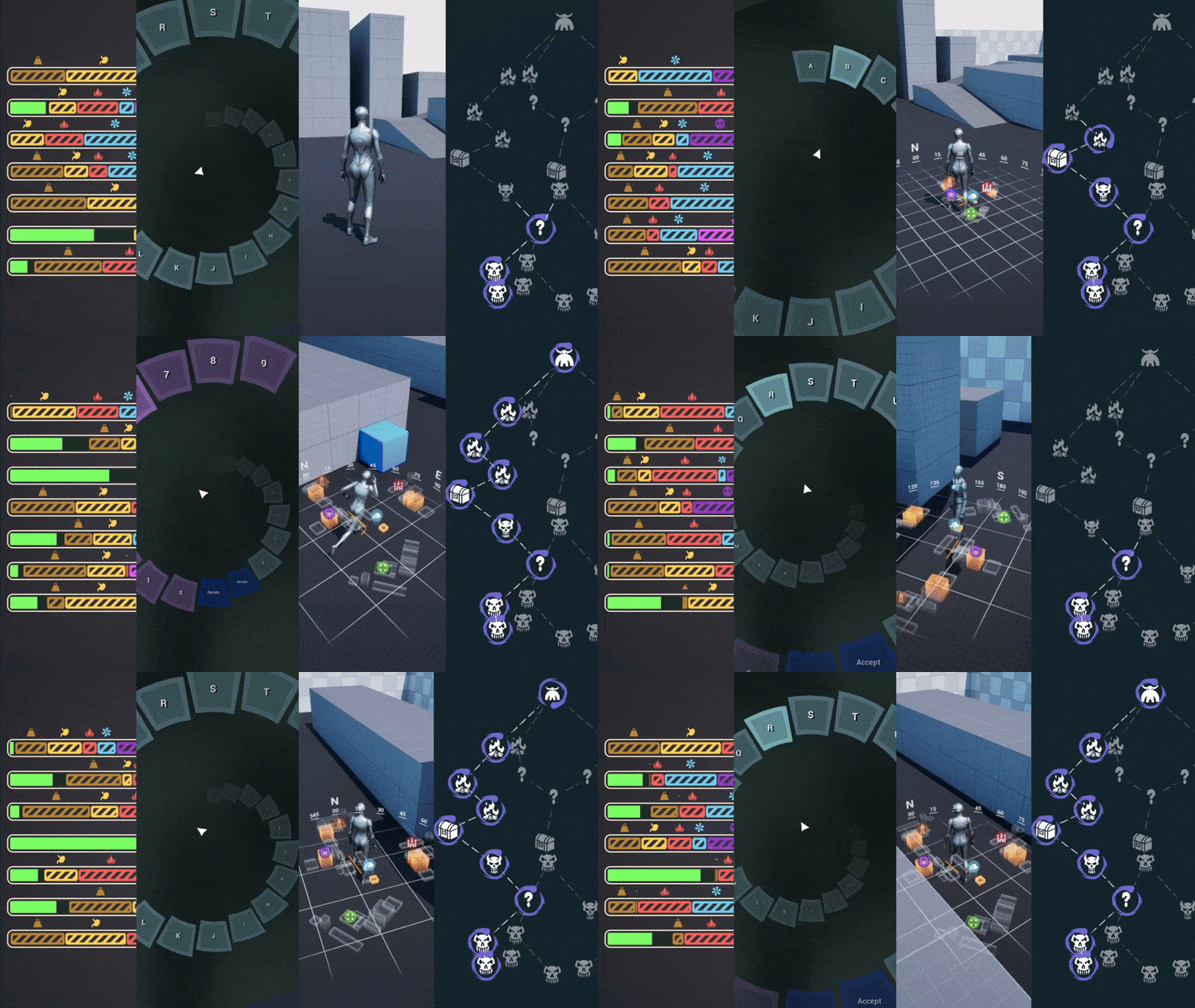
When we launched the UX is Fine streaming channel, there was no perfect roadmap. No multi-page pitch deck. No lofty grand vision. The idea began as a simple observation from UX is Fine’s Tech Director, Mike McMahon. Our social channels were quiet and we had a lot to say. Streaming felt like a natural way to show the work we do every day and build trust with the game dev community at the same time. So we did the most UX is Fine thing possible. We started anyway. We figured it out out loud. We let the process evolve in real time.
What none of us expected was just how much our viewers would connect with the honest parts. Not the polished parts. The parts where Unreal crashes in the middle of a live breakdown. The parts where I am staring at five different potential approaches and thinking through which one will actually work. People do not just want button-by-button tutorials. They want to see someone wrestle with the problem the same way they do. They want the real day job.
What We Thought the Channel Would Be
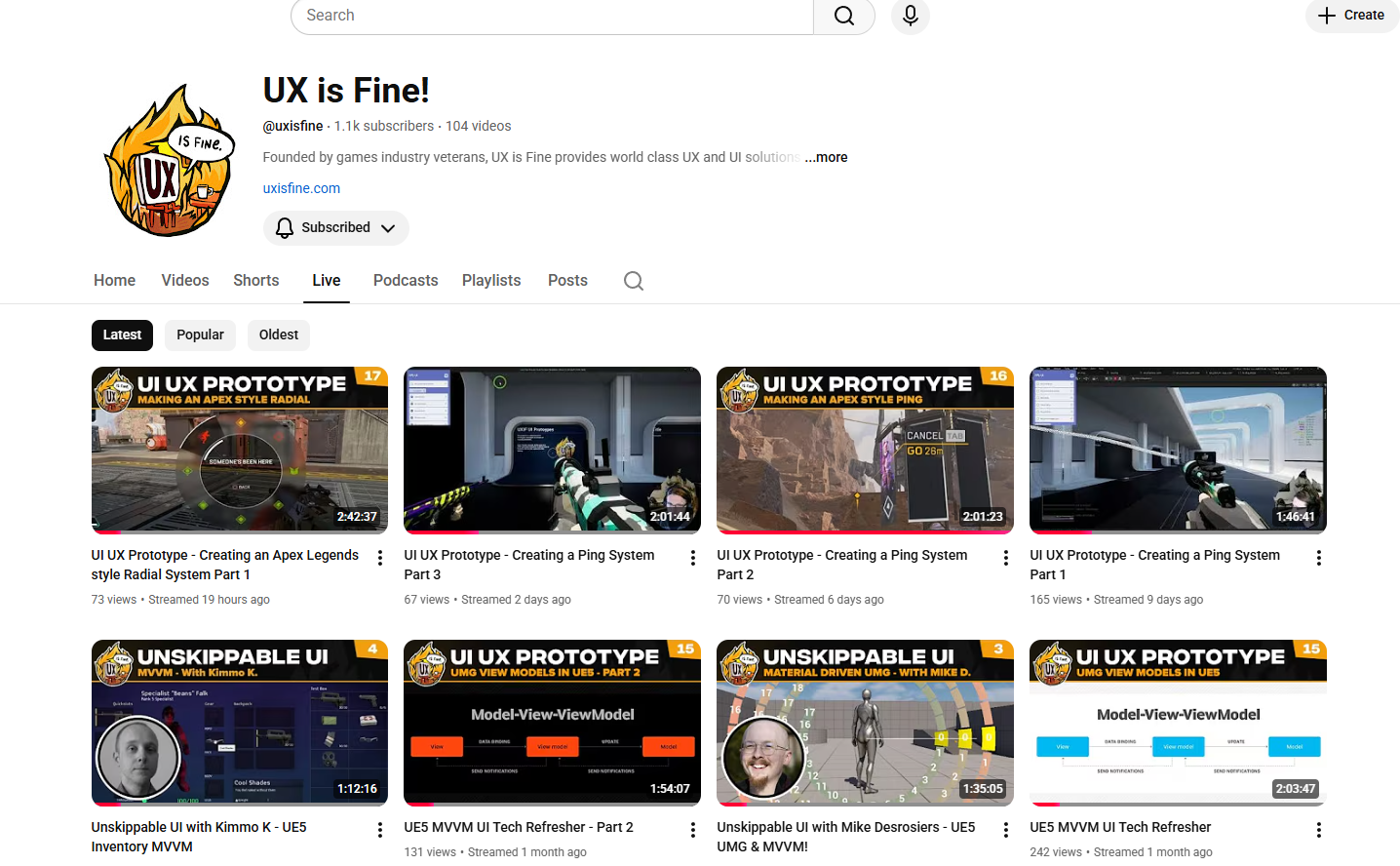
In the beginning, we had no unified blueprint. We were exploring. Trying things. Asking ourselves who the audience was and what they actually wanted to see. Mike wanted to spotlight the team’s raw technical talent. I was thinking about format and tone and whether we should lean tutorial, behind the scenes, experimental, or something stranger.
We tried everything. Interviews. Game jams. Long form development. Tiny one-offs. Slowly, a pattern emerged. The content that worked best was neither ultra-scripted nor ultra-ambitious. It was the small slices. The difficult UI bits. The tricky UMG problems. The very specific, very recognisable pieces of popular games that people always wondered how to build. Our streams started functioning like a tasting menu. Bite-sized and delicious. No need to commit to a full meal.
That was the turning point.
The Big Learning

People were not showing up for personality. They were showing up for the work. They wanted to watch someone explore. They wanted the messy path, not the polished destination. They wanted to see us do precisely what we do every day at UX is Fine, and they wanted us to do it live.
At one point, a viewer said, “Finally, someone showing the hard questions.” That was the moment it clicked. We stopped performing. We stopped worrying about being the perfect presenter. We leaned fully into the process. Honest. Unscripted. Sometimes chaotic. Always educational.
It also helped that whenever we broke down a UI from a major title, the people who built it didn't seem upset. They were excited. They treated it like fan art. That was the moment we realised the best framing for these streams. Everything is a love letter. We celebrate the work first. Deconstruction comes second.
The Impact We Did Not Expect
Clients now use our streams as a litmus test for how we think and how we build. Recruiters hear from talent who already know us because they watched a stream. Potential partners point to the work and say they want that level of clarity and craft on their project.
Internally, the streams have become an unlikely form of validation. They show speed. They show depth. They show that there is no faking it. Live work in Unreal is either right or it is not. Viewers see that and they trust it. It has even sparked conversations about formal recognition like Unreal authorized instructor status, which I am actively pursuing now.
The irony is that long form game development on stream was not the thing that earned us credibility as Unreal experts. It was the tight, interesting slices. The little complicated bits. The exact areas of UI work that studios hire us for every day.
What Did Not Work
The two month long game jam arc. Great learning. Terrible format. It drained energy and created very few clean outcomes. Shorter jams did better. Single problem slices did best. Anything that felt like a full game project simply did not communicate the kind of UX and UI expertise we wanted to highlight.
Also, prep does not save you from streaming reality. OBS always betrays you. Unreal always knows the funniest possible moment to crash.
Where We Are Taking the Channel Next
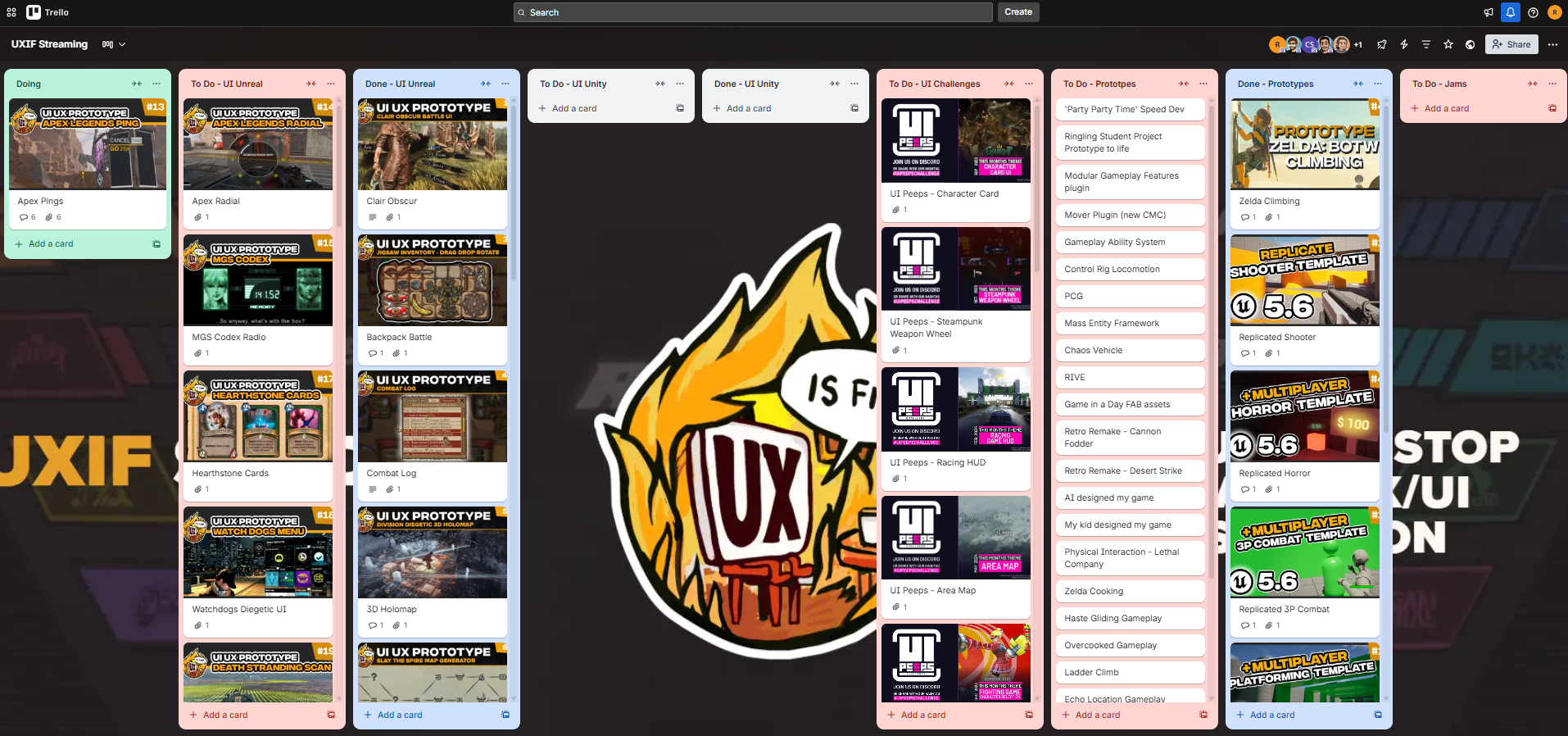
2026 is about refinement and expansion.
Here is what we are focused on.
More bite sized UI slices of popular games.
A growing playable gallery of UI experiments that we will host on the UX is Fine site.
Small game jams that show how fast you can prototype when you know your tools.
More focus on motion graphics to showcase polish and craft.
Time-lapse builds of complete UI recreations.
Bringing artists into the mix to add flair and style to the technical work.
Exploring student-level involvement like guest demos, mentoring, Q&A sessions, and collabs.
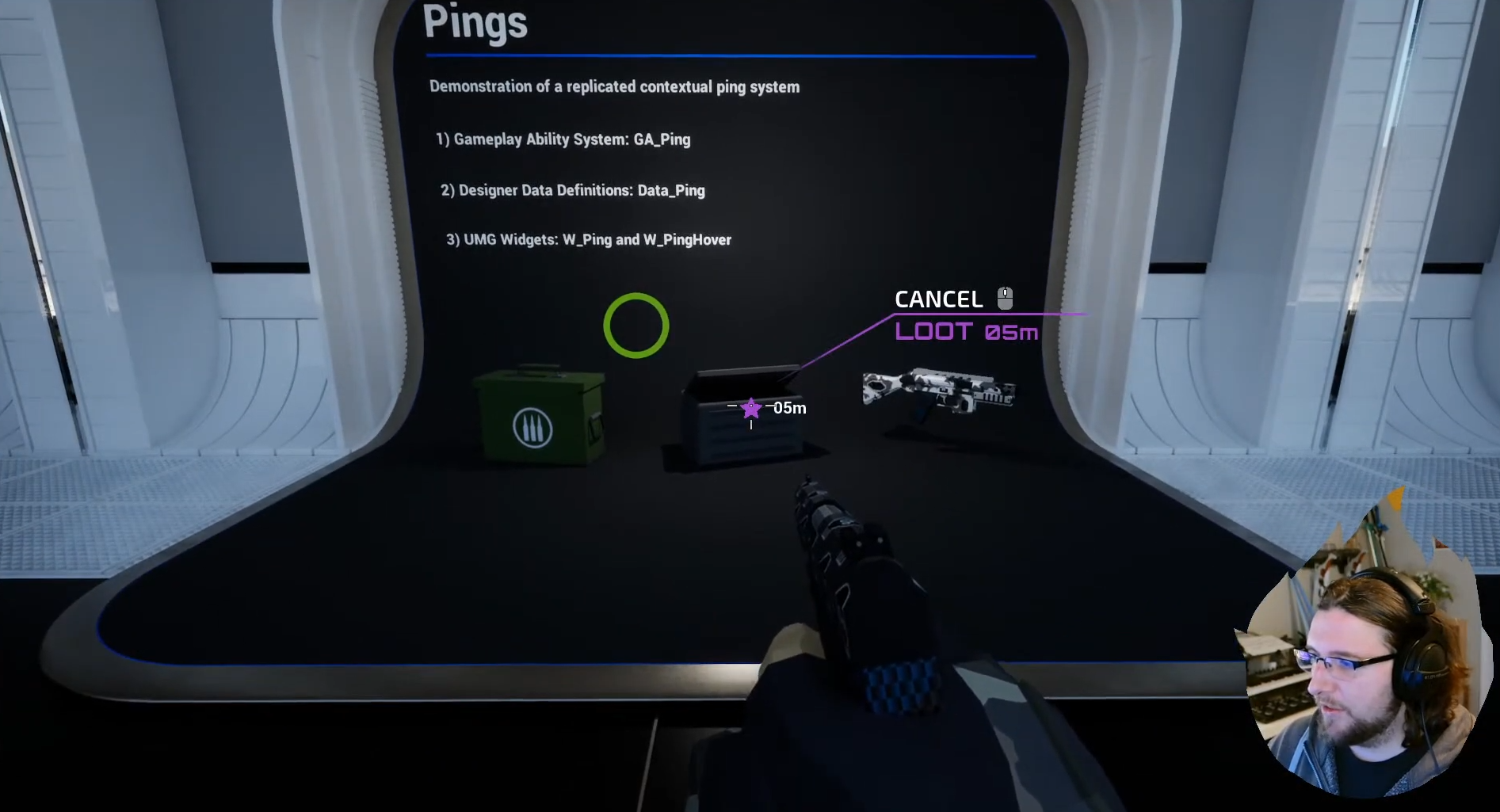
The gallery piece is something I am especially excited about. Imagine an interactive library of ping systems, radial menus, motion graphic UI, backpack inventory concepts, and other common patterns. Something we can take to conferences. Something viewers can download and explore. A long-term evolving artifact of everything the channel explores.
Why We Share So Much
Many studios keep their processes locked down. We prefer to put ours on the table partly because it helps the community. Mainly because it reflects who we are as a company. We are creative problem solvers. We love the craft. We like making things better. We like talking about how to make things better. Sharing is part of the fun.
Streaming has become our most authentic form of communication. It shows exactly how we think. It shows exactly how we work. It has shaped how people see UX is Fine. Transparent. Technically sharp. Proud of the craft. Happy to help.
And honestly. It has been a blast.
