

Where You Land on AI Is Your Call. So Is When You Move.
If you're a studio leader trying to figure out what to do about AI, you're probably tired. Tired of the hype, the pitches, the conflicting advice, and the nagging sense that you should be doing something, but what?
The market is telling you to adopt more AI. It isn't telling you how to evaluate where you are, where you should be, or whether the next step is a step at all.
That's the actual job. Everything else is a sales pitch.
Based on our experience, here are the stages we encounter with our partners along their AI journey.
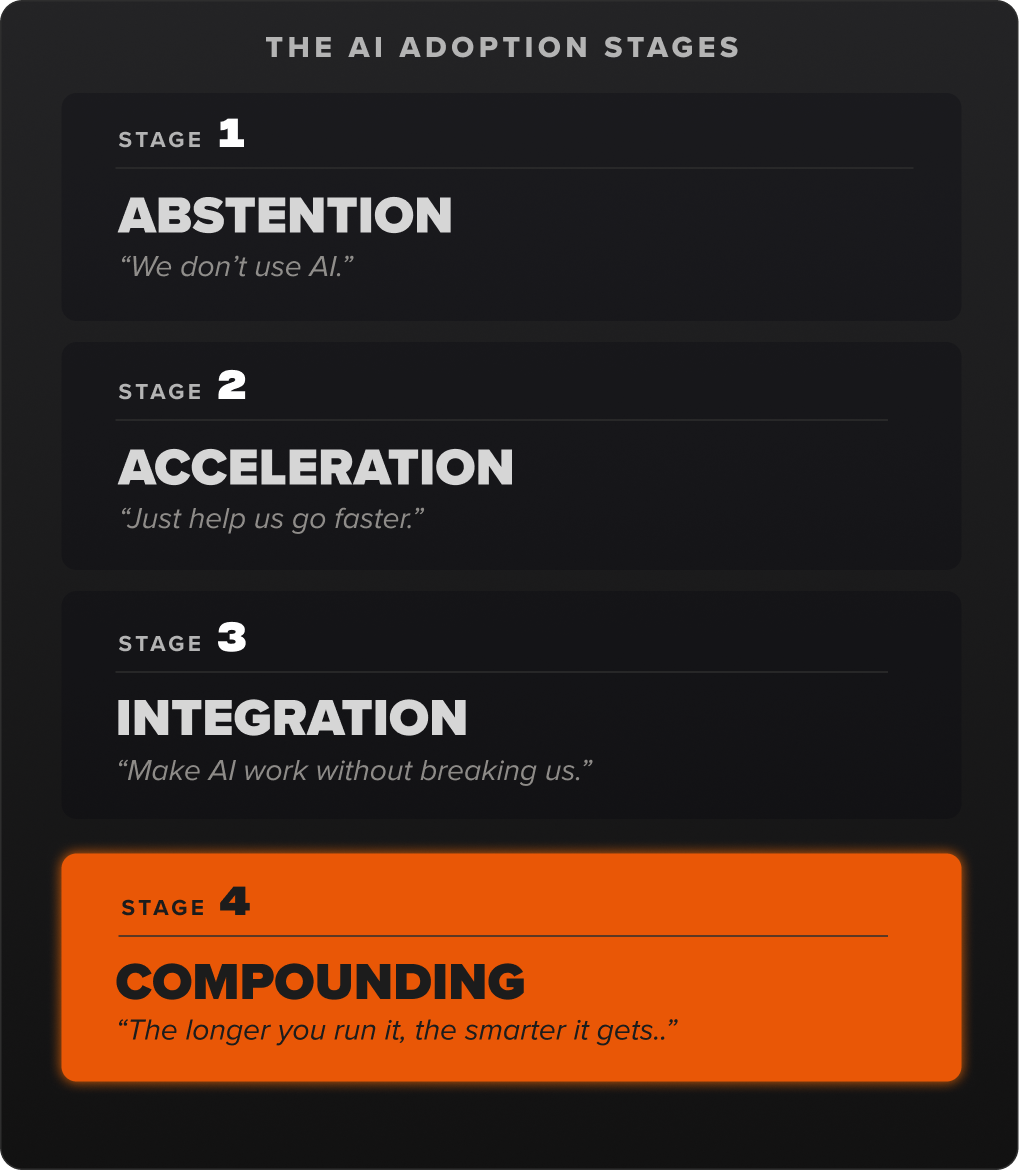
The four stages
Abstention: "We don't use AI, and that's a decision."
Economic, ethical, legal, IP, brand, risk. There are real reasons studios stay here, and this choice doesn't have to erode into being behind by default. The work of staying here well is the same work that makes any later move easier — getting honest about where communication breaks, where decisions get made twice, where tacit knowledge walks out the door.
Acceleration: "Just help us go faster."
AI productivity tools show up in the pipeline to remove friction so your craftspeople can spend more time innovating, iterating, and polishing. The friction that gets removed isn't only technical — it's the tool-fighting and re-explaining that pulls designers out of flow and forces engineering and design to relitigate the same decisions every sprint.
Integration: "Make AI work without breaking us."
Stage 2 was the wild west. Fast, useful, and accumulating tech debt, UX debt, and tool fatigue. Integration is the cleanup. AI gets folded into the workflows and pipelines your team already uses. The practices that survive are the ones you can sustain. Done right, integration restores the shared context your team lost in Stage 2 — so design, engineering, and production are working from the same picture again, and decisions stop getting made twice.
Compounding: "The longer you run it, the smarter it gets."
Every artifact your studio produces becomes future leverage. Validators, code reviews, design rationale, playtest archives, postmortems. Past learning surfaces automatically at the moment of new decisions, not through someone's diligence. Each day, week, sprint, or project. Across teams. A new hire's third week starts looking like a senior's third year, because your studio's accumulated judgment is in the room with them when they need it.
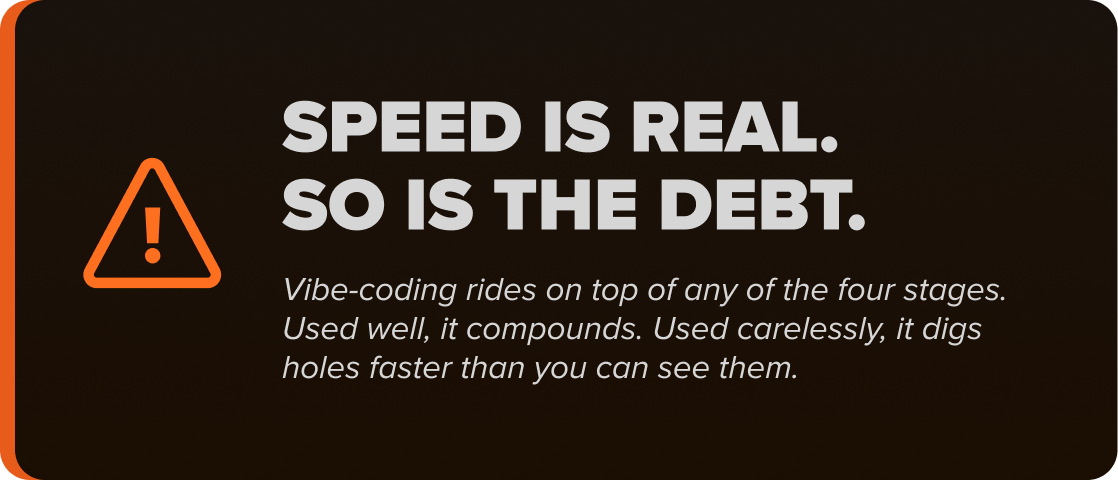
Oh, and then there's vibe-coding
Vibe-coding isn't a stage. It's a posture you can adopt in any of them, and the speed it unlocks is real.
So is the debt. You can vibe your way into a hole faster than you can dig out by generating UI without framing the UX, coding without a solid architecture, and creating a mess at a pace your team has never seen.
Vibe-coding only unlocks human productivity in the hands of creative and technical craftspeople working hand-in-hand.
How we work with studios on this
AI doesn't change what we're good at. It raises the stakes on getting it right.
We're a world-class, trusted partner for UX, UI, and implementation work. Studios bring us in to innovate while reducing risk through our deep understanding of player experience, creative judgment and execution, and technical expertise.
We've worked with AI in production, on real projects, long enough to tell the difference between what works and what only demos well. There's a lot of outmoded and inefficient AI practice in the market right now. Our partners trust us to navigate that with them.
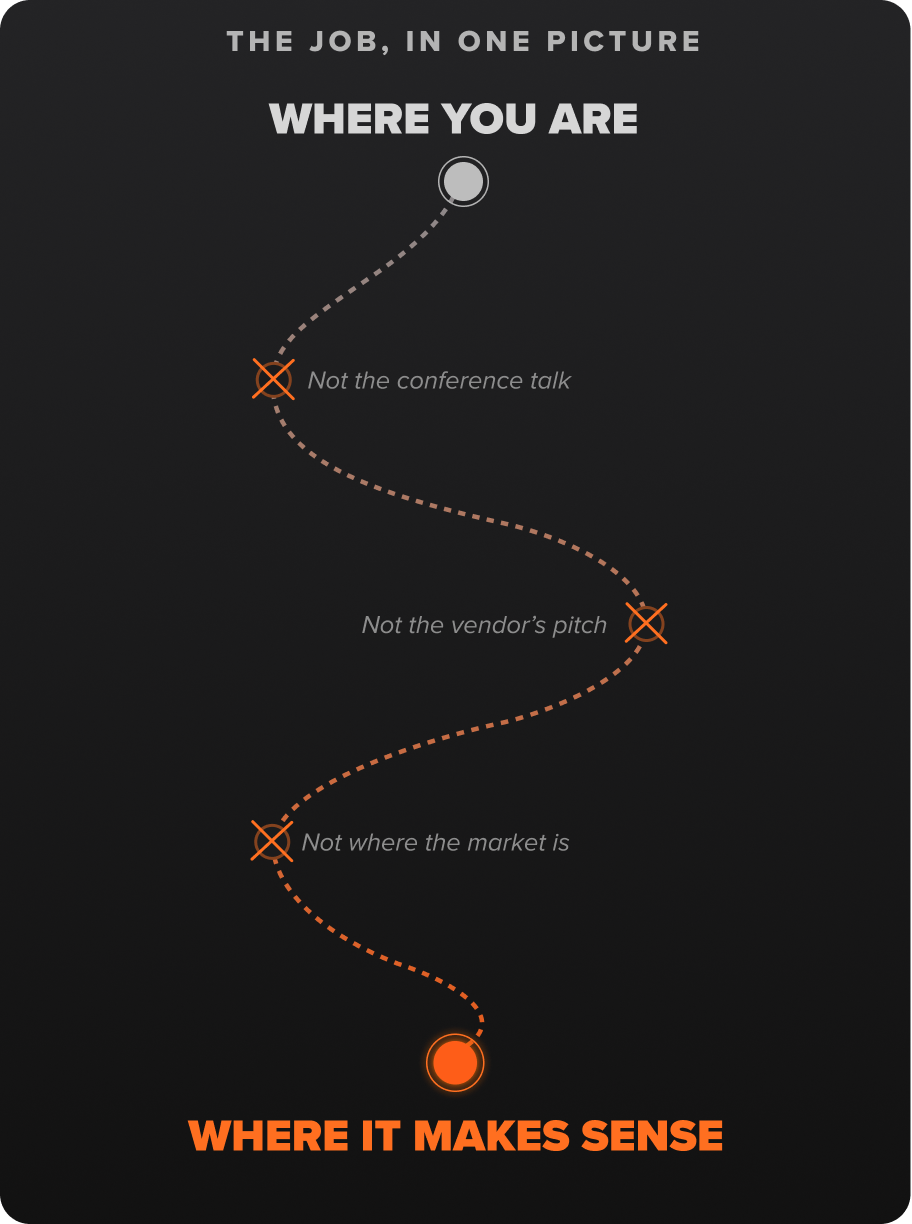
We meet you where you are and take you where it makes sense. Not where the market is, not where the vendor wants to sell to, not where the conference talks say you should be. Where it actually makes sense for your studio, your team, and the games you're making.

Jason Schklar is currently CEO and co-founder of UX is Fine, the best full service games UX and UI company in the world. As a sought after consultant, developers, publishers, and investors look to Jason to provide game design, product, and UX feedback and direction that is essential to shipping great games. The results energize teams and deliver games that engage, retain, and monetize players. He also evangelizes the ROI of UX in talks and workshops and spends a fair amount of time advising, mentoring, and coaching individuals and teams around the world through various accelerators, incubators, and mission based hubs of talent and game development.
For 25 years Jason has been helping folks find the fun, remove the suck, and build memorable and profitable games. He still loves it.
