

How AI Helped Us Protect Our Team's Time
Building With Empathy
Sometimes the best tool for the job does not exist. That means you have to build it yourself. At UX is Fine, the process of creating a custom solution for ourselves became the catalyst for a fundamental shift in our studio's DNA. What started as a side project to solve a scheduling headache unexpectedly transformed into a new way of working.
The Miro Ceiling

For most of 2024, we planned our weeks on a massive Miro board. Because we balance multiple projects and partners, we have to be careful not to stretch the team too thin.
Our Wednesday planning calls involved moving digital sticky notes around a canvas that eventually became bloated and slow. It couldn't show us workload patterns or capacity limits. We were using a drawing tool to solve a data problem, and we couldn't find an off-the-shelf tool that did it better.
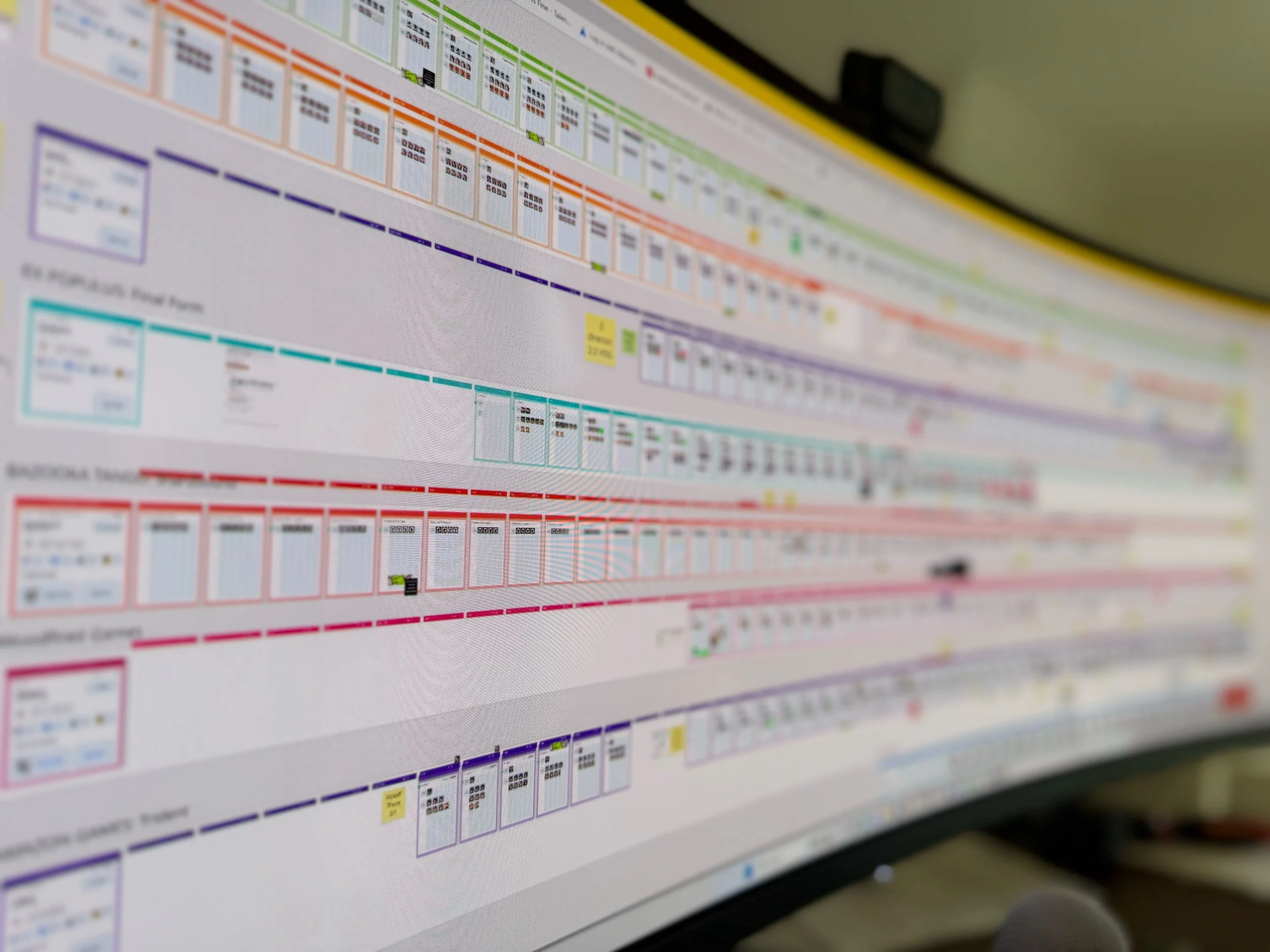
Phase 1: The Traditional Struggle
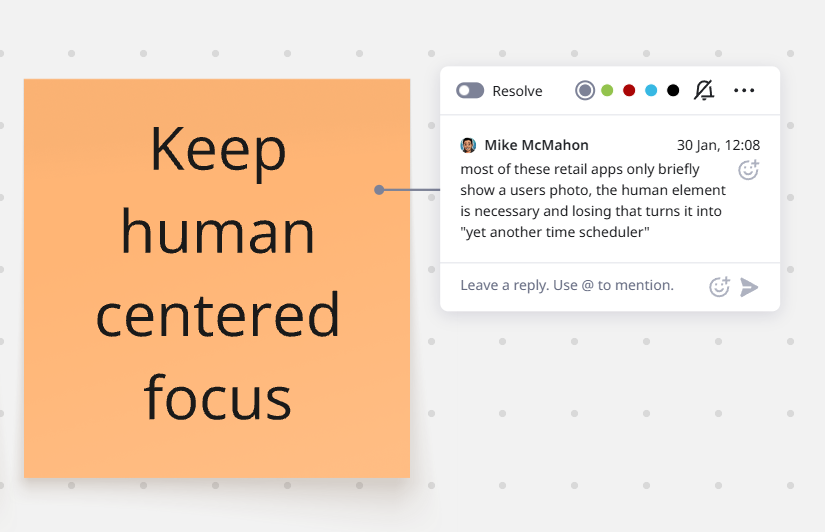
In late 2024, we decided to build. Our Creative Director, UX Director, and I joined forces over winter break to sketch out a bespoke, web-based calendar planning tool. We made progress, but it was slow. We were fitting development into the cracks of our client work. We had the logic, but the polish felt months away. The charts, filters, and integrations were stuck in the backlog because the manual effort required to build them was simply too high for a side project. We were building the traditional way, and the velocity just was not there.
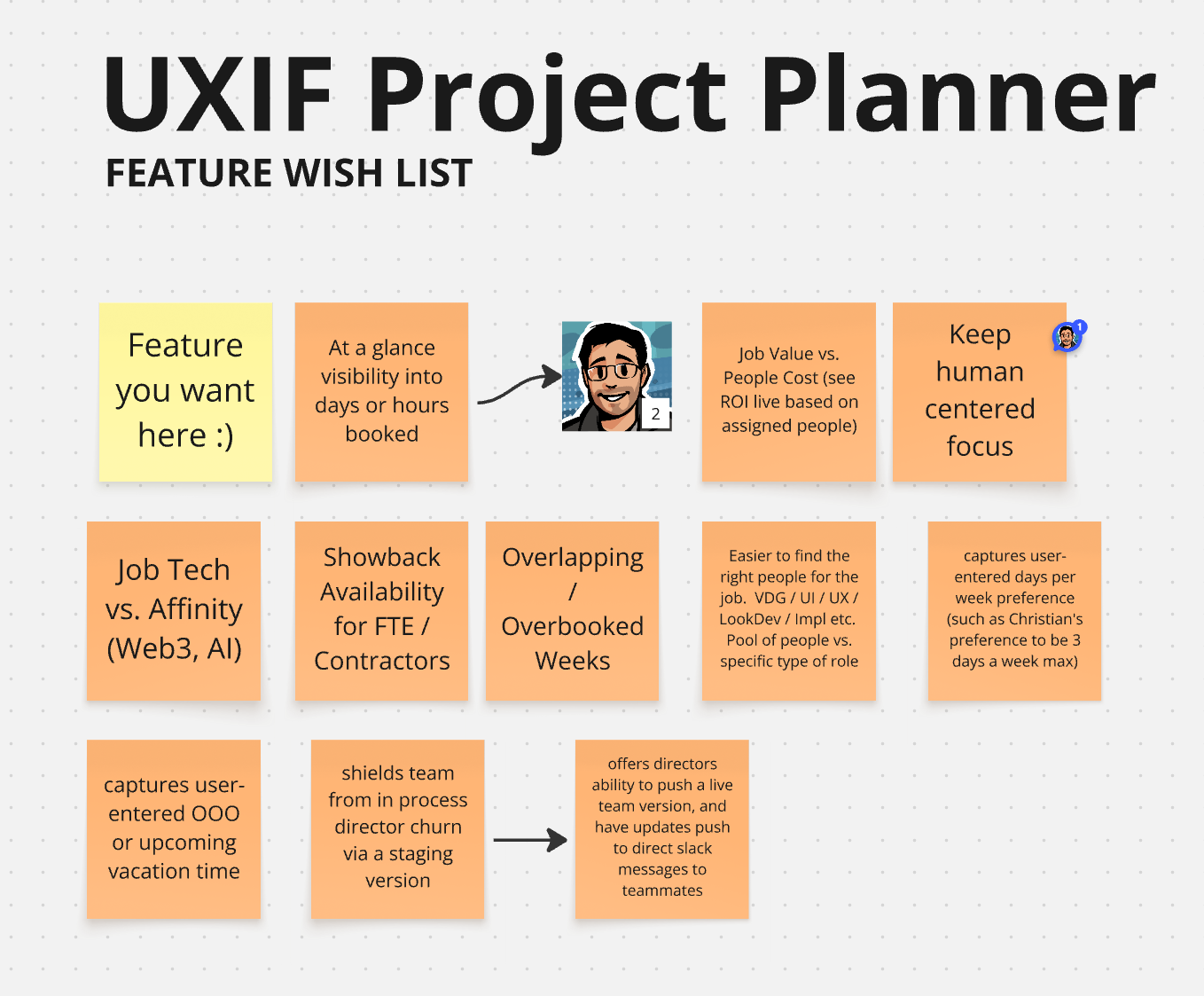
Phase 2: The Claude Awakening
Then came the 2025 AI shift. I moved from using AI as a simple assistant to using it as a senior partner. I started using Claude to tackle the heavy lifting.
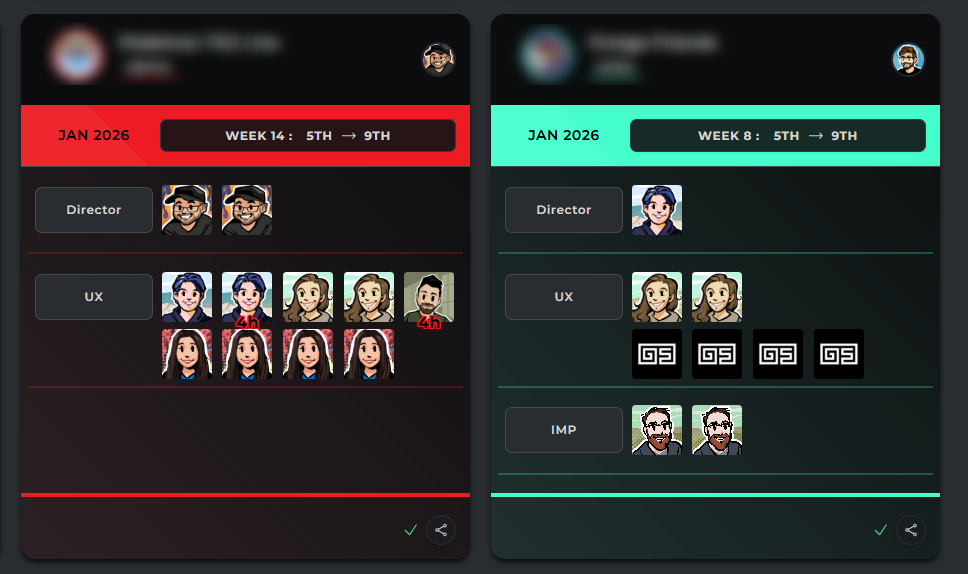
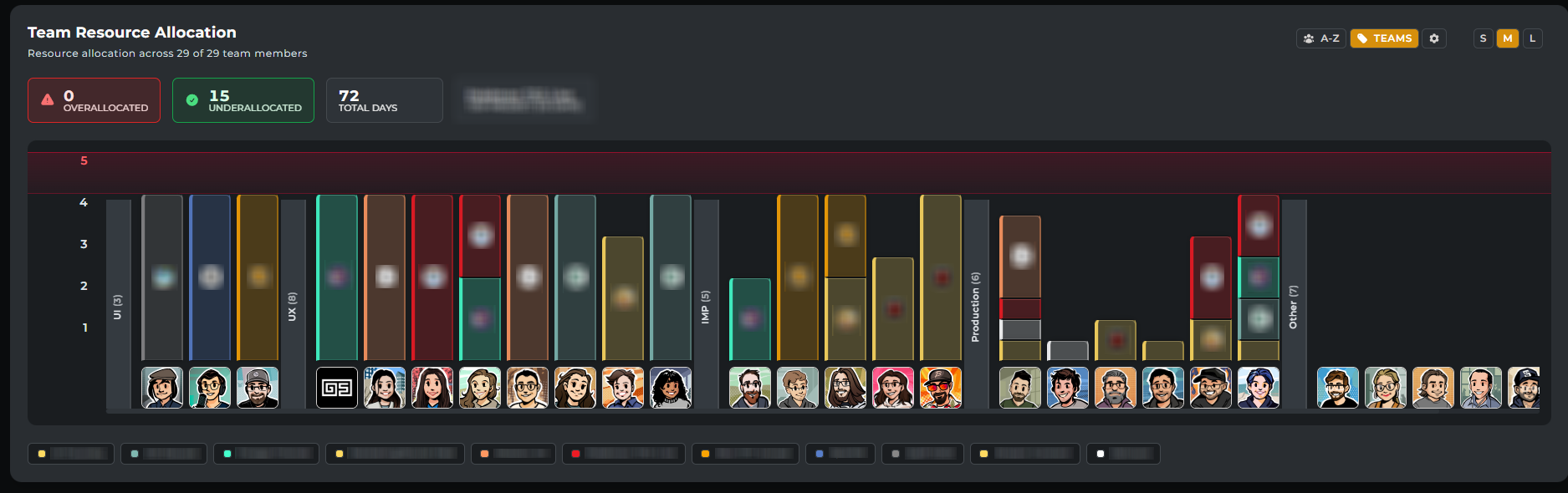
I remember the moment clearly. I was trying to build a complex visualization of staff capacity. Traditionally, this would involve hours of fighting with charting libraries and data structures. I gave the context to the AI agent. Within minutes, it produced a working, beautiful bar chart with a legend and dynamic filtering.
"I feel like I just woke up for the first time," I told the team. The cognitive load of wondering how to write the code vanished. It was replaced by the excitement of deciding what we should build next. We realized our manual output capacity no longer limited us. This was the moment our internal strategy fundamentally changed.
Phase 3: Human Centric Features and the Slack Revelation
One of the best examples of this speed was our Slack integration. We built a feature that allows us to manually push the finalized weekly schedule to our team's Slack channels. Because project details are often unpredictable, our project calendars might not be finalized until late Thursday, Friday, or even occasionally a Saturday morning.
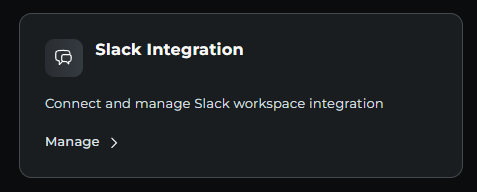
The first time we pushed a schedule outside of standard hours, we saw the unintended consequence: a flurry of Slack notifications tagging our team during what should have been their do-not-disturb time. It was a disappointment to see our tool causing notification anxiety.
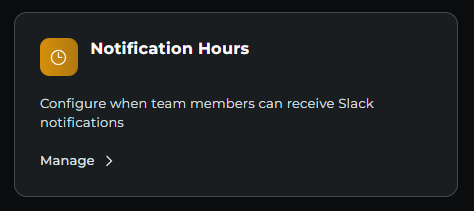
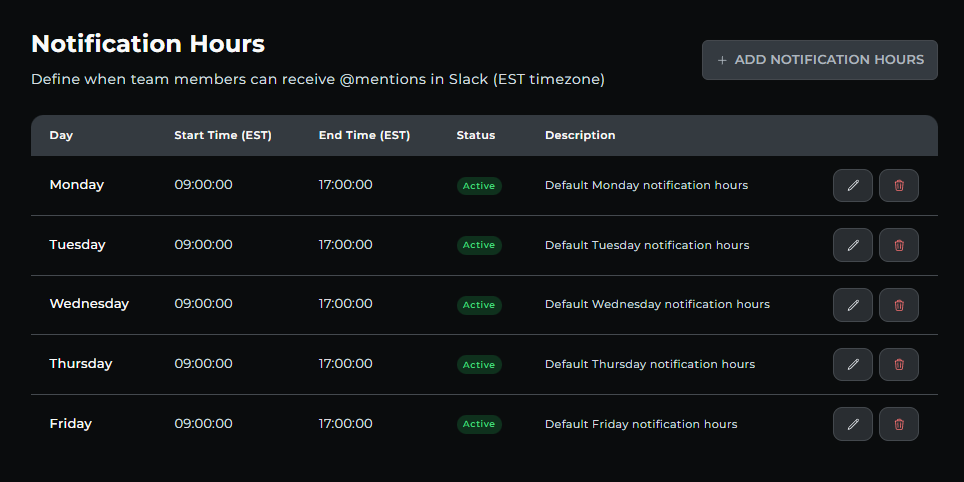
In a traditional development cycle, adding "smart" notification logic would have been a low-priority ticket that languished for weeks. With our new AI workflow, we reacted instantly. During a ten-minute break, I introduced a feature that detects non-working hours. Now, if we push a schedule late, the tool explicitly states that it is not tagging folks because it is after hours. It was a small technical change that demonstrated genuine concern for our team's user experience.
The Result: A New Benchmark for Velocity
Today, our staffing tool features:
Weekly Scheduling: At a glance views of project assignments.
Visual Capacity Indicators: We no longer over-book our team because the tool shows us in real time when a designer is at their limit.
Smart Archive Views: We never lose history, but we keep the current view clean and focused.
Empathetic Integrations: Custom logic that respects our team’s time and boundaries.
From Internal Lab to Client Reality
We aren’t just keeping these lessons to ourselves. We are already applying this high velocity workflow to our client work, and the results have been incredible.
One of our current partners is seeing this trajectory firsthand. Tasks that used to take weeks of back-and-forth are now solved in real time. They have marveled at our increased capacity not just to talk about ideas, but to build and respond to them instantly. We are creating at a speed that simply was not possible even a few short months ago. We’ve stopped asking "can we build this?" and started asking "how far should we take this?"
What This Means for You
This tool is our proof of concept for a new era of development. It shows that we can:
Solve Specific Problems: If your business has a pain point that off-the-shelf software cannot fix, we can build a custom solution without the old-school enterprise timeline.
Move Fast: We ship updates faster than we can write tickets. This lets us experiment more and achieve better results for our partners.
Prioritize UX Above All: Because the technical heavy lifting is easier, we can spend 90% of our time on strategy and design and only 10% on the "plumbing."
We are not releasing this engine as a product. It is our internal secret weapon. However, it is an excellent reminder of what is possible. When you solve your own problems with the right tools, you unlock the ability to solve client problems with a level of speed and precision that used to be impossible.
Is your team hitting a "Miro ceiling" with your internal processes? We would love to show you how our AI-augmented approach can build the tools you actually need.

Mike McMahon is the Studio Engineering Director at UX is Fine, where he bridges the gap between high-fidelity design and scalable game interfaces. A former founding engineer and front-end architect, he’s built patented technology and scaled cloud ecosystems within AWS. From C++ and Unreal Engine to TypeScript and AI agents. He’s obsessed with using AI to collapse the distance between a creative vision and a functional product.
